2016年9月20日 星期二

What was that you said? | 你剛說什麼?

At times straightforward and up-front, at others modest and demure; sometimes distant and aloof, but on occasion flashy and flamboyant. As a designer of meetings, I listen to the messages expressed by buildings. What buildings say is important because it influences the behaviours of meeting participants. And in turn, those behaviours can make meetings more or less successful.

有時簡單直接,有時莊重拘謹,有時若即若離,有時浮華張揚。作為會議設計師(Meeting Designer),我會聆聽建築物所傳達出的訊息。建築物的訊息很是重要,是因為它影響與會者的行為。反過來,這些行為將影響會議的成功與否。


Let’s take a powerful building, the Palace of the Doge in Venice, for instance. When stepping inside the vast Council Room, people instantly change what they were doing before: they slow down, lower their voices, take their children by the hand – like when you enter a church, although the ceiling is that high. Very clearly, certain things are not done in there: children don’t run across the Council Room and it’s not the place for a passionate French-kissing session with your lover. Why not? What makes us so aware of what is appropriate and what is not?


讓我們用威尼斯的總督宮為例,一座本身就很有力量的建築物。當一踏入廣闊的安理會房間裡,人們便會立即改變他們的動作:慢下來,降低聲音,用手拉著孩子;就像進入教堂一樣,雖然天花板那麼高。很明顯的,在這個房間中有些事情是不能做的,像是:孩子不會跑來跑去,不是適合與情人來一場法式熱吻的地方。 為什麼呢?是什麼讓我們暗自決定什麼適合、什麼不適合呢?

Palace of Doge, Venice

I don’t know the exact mechanism but without any doubt it is connected to our receptiveness to the signals we pick up from our surroundings. In our heads, these signals are directly forwarded to a kind of toggle for acceptable and unacceptable behaviour. For my work I am not so much interested in understanding the mechanism in detail but rather in the phenomenon as such.

我不知道確切的腦部運作機制,但毫無疑問它連接到我們對應周圍環境的信號。這些信號被直接轉發到一個腦中的某機關,用以決定可接受和不可接受的行為。對我的工作來說,我並不需要了解詳細的運作機制,但這樣的現象對會議設計師是很有趣且可以運用的。


The point is that virtually all meetings are held in buildings and it is my experience that buildings speak to people. Not only to people who are willing to listen, but to everyone. What they say is called the Venue Message. Usually, the building invites you to do something; it exudes an assignment. The message sounds like a sentence taken from a theatre dialogue and you, the visitor, respond to the signal, to the stimulus. Without consciously noticing it. Thus, the Council Room in the Palace of the Doge in Venice says: “be humble in the sight of the wealth I have gathered in many centuries!” Anybody with half a bit of common sense simply “gets” that message and literally incorporates it with due respect.


關鍵是,幾乎所有的會議都在建築物內舉行,就我的經驗,建築的確跟人說話。它不僅對那些願意聆聽的人說話,它說話的對象是所有的與會者。這就被稱為場地訊息 (Venue Message)。一般情況下,建築物會請你做一些事情它會發出一個任務的訊息。這個訊息就像戲劇的對話,而你,作為參觀者,會對此信號做出回應,在無意識的情況下就會發生了。因此,總督宮裡的安理會房間正在說:「保持謙卑!在視力所及的範圍內,盡是我幾世紀以來獲取的財富!」任何人只要有半點常識就能獲取此信號,並真的給予應有的尊重。


And due respect and French-kissing don’t go together.


而此尊重與法式熱吻並不相容。


2016年4月8日 星期五

Refreshment does more than refreshing | 茶敘時間不只是茶敘而已

Last time, we have talked about FOOD and BEVERAGE in a conference. Further down, many are wondering about the refreshment during break time. Yes, it plays a critical role especially it is "Refreshment". Here are some ideas for your meeting break.

BEVERAGE
In morning session, Hot Coffee and Tea are the best sellers! Hot caffeine drink can wake up participants and give a soft social medium for them before meeting begins.
Saturday Coffee - Amigos, fotos, e cafés. Quer companhia melhor pra iniciar uma tarde?!:          The Downton Abbey effect ~ the old-school ritual of hot tea no matter what the season.
jadorejcrew.tumblr.com                                         miraquechulo.wordpress.com

Water must be offered without saying because dehydration can lead to fatigue. However, in Western society, iced water is highly recommended. On the other hand, in some Asian countries, warm water is preferred.
Lemon, Ginger and Basil Iced Tea for Detox | Paleo Grubs:

Juice is also welcome, especially in afternoon session. But remember to keep fresh and cold. No one wants it to go bad when it is usually ready in advance and sits quite long during break. So, to prepare sufficient ice is the key!
 

No alcohol drinks for sure, unless you aim to make fun with the group.
 

SNACKS
Similar to Food arrangement, as healthy and environmental issue being high concern nowadays, the dietary preference has to take into consideration. The right snacks can make participants recharged, energized and focused during long-day meetings. Wide variety is also important; to give a big feast to eyes in colors and kinds will also help. At the same time, do not feed them up whether there is a big dinner or not, because people easily get logy from eating too much.

Fruit is a perfect choice. They are rich in vitamins, minerals and fiber that would keep people feel full longer. Plus, it is safe regardless of allergy or dietary constraints. But in the same manner with juice, keep it fresh and cold.

Nuts is another healthy choice but make a clear sign for allergy sake.
 An easy recipe for mixed nuts flavored with rosemary, brown sugar, maple syrup, sea salt and cayenne pepper.:

Sandwiches in finger-food size, cracker with cheese, veggie bar, etc. are all good options to enrich your refreshment bar.

Serve turkey and pesto between puff pastry for a mini sandwich that's the perfect combination of adorable and scrumptious.:    As hard as you tried to avoid it, you were put on the list for veggie tray. Well bring your veggie tray with a bang, and put the vegetables in their own cups with ranch. Not only is the portion size great, but keeping the dressing separate keeps it from getting on other food.   
countryliving.com                                                    learningliftoff.com


WHAT's MORE?
Speaking to break time, drinks and snacks come to mind immediately. But back to the basic, why should we have break during meetings? The initial purpose is to REFRESH participants from still position in serious topics. Therefore, it can be more than refreshments.


For many companies, tight schedule to fill in everything is always an issue even though they know the significance of team building / motivation / team work. No time and no budget for it! In fact, you can benefit from break time to have refreshment and team activity simultaneously.

How? Asia Concentrate Corporation has the total solution for you. Contact our event designer at service@asiaconcentrate.com!


|| Reference ||


2015年8月26日 星期三

Interpreter in a conference. | 會議中的雙面翻譯

The conference interpreters are specialists in oral communication between people and culture. They are not only to render a message from one language into another, naturally and fluently, but also to adopt the delivery, tone and convictions of the speaker and speaking in the first person. It is different from translation, which deals only with written texts.

In the early fashion, interpreters have always been involved in the development of international trade and cultural exchange. With the emergence of simultaneous interpretation in the middle of the 20th century the profession developed considerably and was shaped accordingly. As international conference attendees are from various background and cultures, and speaking different languages, the job of an interpreter is to enable the attendees to communicate with each other, not by literally translating word to word, but further by conveying the idea which they express.

There are three forms of conference interpretation:

- Simultaneous interpretation
This is the most frequently used form, where the interpreter speaks at the same time as the speaker, usually through electronic equipment, offering immediate communication in as many languages as required in a soundproofed booth. In the practice, the interpreter sits in a booth, listening to the speaker in one language through headphones, and immediately speaking their interpretation into a microphone in another language.
The interpreting equipment transmits the interpretation to the headphones of listeners in the meeting room. This form is appropriate in bilingual or multilingual meetings and has the advantage of not lengthening the meeting. It facilitates a lively discussion and encourages more spontaneous contributions. Aside from its benefits, simultaneous interpretation requires a high level of concentration of a specialist, since the interpreter is doing several things “simultaneously”:
listen and speak, analyze the structure of what is being said in order to present the speaker's argument, listen to his/her own interpretation to check for slips of the tongue.
In the due course, interpreters usually take turns of about 30 minutes.

simultaneous interpretation
source : barinas

- Consecutive interpretation
This is usually used for small discussion groups and in negotiations. The interpreter is in the same room as the speaker and follows their speech while taking notes before presenting their interpretation. Very long speeches may be broken up into parts, with interpretation after each part, but a trained interpreter is capable of consecutive interpretation of speeches several minutes long. Note taking is an essential part of consecutive interpreting. It involves committing to paper the logic and structure of the statement as an aid to memory, rather than recording everything that is said. It is suitable for scientific and technical presentations given by a single speaker, or in meetings where only a small number of languages are spoken, since it makes the meeting longer.

source : BOYI

- Whispered interpreting
Whispered interpretation is essentially simultaneous interpreting without a booth and rarely used in a conference. The interpreter sits very close to the listeners and provides a simultaneous interpretation in a quiet voice. At least two interpreters take turns. The practice is hard on the voice and appropriate only for short meetings. This form is not recommended for more than two people because if several interpreters are working at the same time in the same room this can be as noisy and unpleasant for the participants as it is inconvenient for the interpreters.


The skills of the conference interpreter
Interpreters must have complete mastery of their working languages, including an excellent command of their native language. They need an immediate grasp of their passive languages and a well-developed capacity to express themselves in their own language. Another essential requirement is a good mind. 

Interpreters need
a good level of general education, a lively and flexible intellect, analytic capacity, the ability to put themselves in the minds of the people for whom they are interpreting.

They also need
to be able to concentrate, have a good memory, have a pleasant voice and good diction, be physically and mentally robust.

Interpreters need to be willing to travel, since their work often takes them a long way from home.

Finally, they have to be rigorous, not only getting the message across, but also in their everyday professional practice. A professional conference interpreter is always well-prepared, is never late and above all has an absolute obligation to respect professional confidentiality.


       References
How interpreters work

What is conference interpreting?

Conference interpreting

What is a conference interpreter?


2015年6月29日 星期一

Why Risk Management is Important | 他山之石:從八仙彩虹趴學風險管理

source: 天下雜誌

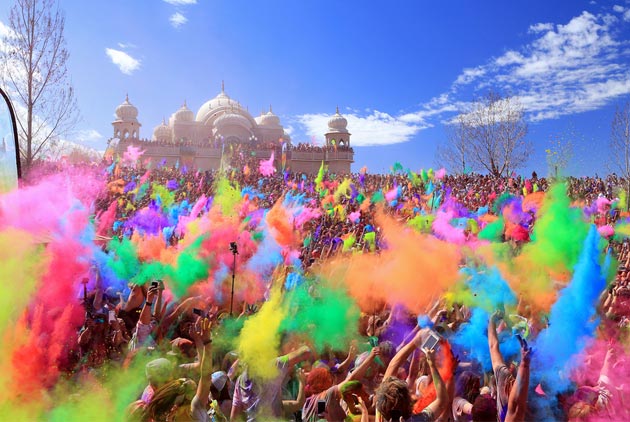
The concept of Color Event comes from Holi Festival in India, which celebrates the beginning of Spring. Hindus believe it is a time of enjoying spring's abundant colors and saying farewell to winter. Traditionally, washable natural plant-derived colors such as turmeric, neem, dhak, kumkum were used; but water-based commercial pigments are increasingly used.

Festival of Colors - World's BIGGEST color party


Later on, in 2012, the first Color Run took place in USA and then started the global trend in the color events.

THE COLOR RUN™ - 2015 Shine Tour

When people enjoy the happiness and get wild in color powder, they may not know this kind of powder is inflammable. The worst of all is the planner does not know the risk. Dust explosion requires the conditions of the following five:
   1. A combustible dust
   2. The dust is suspended in the air at a sufficiently high concentration
   3. The dust cloud is confined (not always required)
   4. There is an oxidant (typically atmospheric oxygen)
   5. There is an ignition source

However, the risky point is the ignition can be:
   1. Electrostatic discharge
   2. Friction
   3. Arcing from machinery or other equipment;
   4. Hot surfaces, including e.g. overheated bearings
   5. Fire

Most event planners avoid the fire but the crowds, which cannot be eliminated, is the ignition! The unfortunate dust explosion of Taiwan Color Party teaches the worst lesson.

Risk management is a process designed to safeguard the various elements of a meeting / an event by minimizing the amount or severity of harmful events that may occur, according to the PCMA book – Professional Meeting Management. The importance speaks loud from the past experience yet many organizers still turn head around. It is not only the matter of human life, but also information, property, financial investment, organization image and professional reputation. To be a responsible event planner, start to review your risk management plan and start it now!

Step 1. Identify those elements or activities which could carry a risk.

Step 2. Identify the risks associated with each element or activity.

Step 3. Determine the possibility of occurrence of the risk and the severity of the consequences if the risk does happen.

Step 4: Risk Prioritization.

Step 5. Formulate, prepare and implement strategies to manage risks
Some common strategies used for risk management are:
1) Risk Avoidance: Avoid those elements and activities which could carry a risk.
2) Risk Retention: Accept some or all the consequences associated with a particular risk.
3) Risk Transfer: Transfer the risk to a third party, e.g. transferring the event security responsibility to a security agency.
4) Risk Reduction: Reduce the risk associated with a particular element or activity by developing an effective contingency action plan.

Step 6. Monitor the risks periodically

All in all, we should always prepare for the worst. In the tragedy of Taiwan Color Party, the lack of evacuation accessibility and immediate response increased the mass injury. While the solid risk management plan is done, can the real condition support?

There is no second chance to manage the risk, so Do it Right the First Time.


Shall you wanna learn more, here is the conference for you.
22nd Anuual Risk Minds International  (7-11 December 2015, Amsterdam)


※ Reference
Wiki   https://en.wikipedia.org/wiki/Holi
Risk Management Plan for Events http://www.eventeducation.com/risk-management-events.php


2015年5月10日 星期日

COMPUTEX TAIPEI 今昔

source: BusinessWire

炎炎夏日一步步逼近,繼1月美國拉斯維加斯「國際消費電子大展 (Consumer Electronics Show, CES)」,以及3月西班牙巴塞隆納「世界行動通訊大會 (Mobile World Congress, MWC)」兩大資通訊界年度盛事後,亞洲最大、全球第二大的「台北國際電腦展 (COMPUTEX TAIPEI)」也將於2015年62日至6日登場,各家參展商無不摩拳擦掌,準備抓緊全球目光。


 source: LATIN POST


source: GSMARENA


COMPUTEX TAIPEI 1981年首次展出,並於1984年正式升格國際級展覽,參展廠商立刻由30家增至145家。雖陸續擴大展覽場地,展位仍一位難求,且因未徹底區隔內外銷,部分廠商越界進行促銷兜售而損形象。1990年,主辦單位決定將內外銷分館展示,並限定國際館不對外開放,獲得國際買主支持,遂於1991年起,將內銷館獨立為另一展覽,由COMPUTEX 正式挑起外銷責任。

如果說80年代是全球資訊電腦相關展覽的戰國時期,90年代就是形成三強鼎立態勢的重要時期。在「市場地理區位考量」、「各國科技實力」、「產業聚落」等因素的催化下,世界三大資通訊展覽逐漸浮出檯面,分別為:電腦資訊科技發源地和美洲市場訊息交會點的「美國 Las Vegas COMDEX Fall 電腦展」、歐洲工業科技大國和歐洲市場訊息中間交會點的「德國漢諾威 CeBIT 電腦展」,以及全球資訊電子產業製造代工生產基地的展示場所「台灣 COMPUTEX TAIPEI 電腦展」。甚至讓該產業業者從90年代起,習慣於每年11月到美國 COMDEX 看趨勢,隔年3月到漢諾威 CeBIT 找應用,6月到台灣 COMPUTEX 買產品。


source: 2GB

2003年台灣爆發 SARS 疫情,一度傳出停辦的 COMPUTEX 最終決定延至9月舉辦,雖然廠商與媒體均欣然同意,但卻因時間點的改變,意外與上海 CeBIT Asia 進行對決。然因原A21展覽館、現世貿三館啟用,擴大參展廠商容納量,加上美國 COMDEX 逐步沒落、當年上海 CeBIT Asia 也大幅衰退,SARS 危機反成為 COMPUTEX 的轉機,使其規模正式爬升為世界第二。

而除了各國廠商相互較勁之外,「最佳產品獎 (Best Choice Award)」與「創新設計獎 (d&i Awards)」兩個大會獎項,亦是鎂光燈追逐的焦點。


Best Choice Award (BC Award) 是專為買家挑選優秀產品的官方評選活動。自2002年起,凡當年度參展廠商皆可提報 ICT 產品參選,以產品的 FunctionalityInnovationMarket Potential 為評選重點,獲獎產品可免費於 COMPUTEX 展示,並享有展前記者會、與國際指標媒體合作專題報導等宣傳機會。


d&i Awards 2008年創立,是為了鼓勵資通訊產品的創新發明,特邀請德國知名工業設計龍頭 iF(國際論壇設計公司)執行該活動,所有參賽產品皆經過專業的國際評審團隊進行評選。獲獎後的線上產品展示、獲獎產品專刊發行及海內外知名資通訊大展的巡迴展出等多樣化的宣傳方式則是該獎項最大特色,也是該獎項與其他國際獎項最大的不同處。


​​

長久以來,COMPUTEX 被業界期許扮演引領未來趨勢的角色,也是將絕妙創意轉變為創新產品的展覽。走過30多個年頭,今年將以智慧科技、行動運算、雲端商業、穿戴應用等四大領域進行展出,屆時將有1,700多家參展廠商參展(如宏碁、華碩、博通、台達電、福特、技嘉、英特爾、微軟、微星等),攤位達5,000多個,涵蓋資訊通訊技術的各個層面。在這波濤洶湧的產業洪流中,COMPUTEX Taipei 持續領著台灣立足全球。

※ 2015年台北國際電腦展:請點此看更多資訊


國際會議│辦活動│參展│商務參訪│獎旅
滿意度最高的亞洲籌辦單位 - 滙集國際 service@asiaconcentrate.com

2015年1月28日 星期三

Universal Gifts! What's Offensive? | 柯P啟示:各國送禮禁忌,你送對了嗎?

Learn from mistakes!

Just a few days ago, the Mayor of Taipei city, Ke Wen-Je, received the watch gaffe from the UK government minister, who didn't expect this gift represents a negative symbol in Chinese culture. Yet, why a gift with big meaning in one country can be offensive to the other? Culture difference plays a great role here. Let's learn something from this story.

photo credit: BBC News

While planning an international event, the give-away can be a disaster if the giver doesn't study on the participants in advance. To make it simple, we can avoid the taboos from below 3 aspects.

1. COLOR
GREEN is not as auspicious to Japan. Yet, in Australia, it is the key color to celebrate their St. Patrick Day.
BROWN is deemed as mourning for the death in Brazil. 
YELLOW is offensive to Syria and Pakistan.
BLUE is preferred in Egypt and Belgium. Yet, it is the color of love in Netherlands, Norway, Switzerland, Syria and Iraq.
For some political or historical reasons, colors can be sensitive in some countries.
DARK GREEN is the Nazi uniform color so not a commonly-accepted color in France and Belgium.

2. NUMBER
13 is a figure of danger to Western Catholics. The well-known "Black Friday", as the 13th on Friday, can make some people feel a constant state of anxiety.
4 means bitter and death for Chinese and Japanese because of its pronunciation similar to death. Yet, in Malaysia, people treat it as a boss sitting pose.

3. FLOWER
WHITE LILY is the symbol of death or ill omen in British countries. Yet, to Romans, it is a symbol of beauty and hope, and Persian people think it is the expression of innocence and virginity.
TULIPS in Turkey is seen as a symbol of love, but the Germans do not think that it is the feelings of flowers.
ORCHID is a symbol of South-East Asia, while in Poland that is a passion flower
LOTUS is rated high in China, India, Thailand, Bangladesh, Egypt and other countries, but in Japan it is regarded as a symbol of the ominous, not used in a memorial ceremony.
CHRYSANTHEMUM is Japan's royal family dedicated flowers but, in Spain, Italy and Latin American, is considered "spent demon" only used in the cemetery.


Although the taboos varies with time and individuals, there is something in common by countries and religions.

Don't give any presents in figure, containing alcohol, or women to Islamic.
Presents in odd numbers and fine package are preferred by Americans.
Give economic but meaningful presents to British and the receivers would open it right away.
Crane means dummies to French and Walnuts is the symbol of bad luck. Plus don't strap flowers as gifts to them.
Giving money to Russian means humiliation.
Japanese value the gifts as it shows their respect to others so remember to bring gifts every meet-ups. Don't open in front of the givers. Comb is not a good option.
No gift to Arabic for the first meeting because it is deemed as bribe.
In Latin America, Scissors means the end of friendship and Handkerchief is considered sadness.
Don't give clocks, shoes or umbrellas to Chinese as they are associated with death and separation.
It is not appropriate to take food as gift in Holland.

Next time, when you prepare give-away for an event, be sure you study your attendance so you don't make any joke like the story.

Shall you know any offensive gifts, share with us!!

2014年10月21日 星期二

How to find the right destination? | 如何找到適合的會議地點?

add to that list-The French riviera, tuscany, santorini and Barcelona  Wanderlust ♡ people to meet, places to go!
source: pinterest

Every experienced event planner knows the importance of site selection but when it comes to destination, it usually goes emotional of the decision makers that event planners, especially conference organizers, put a lot of effort on getting the decision makers back to the reality. Therefore, as a professional organizer, what should we prepare and what the decision should be award of when the decision comes in place?

1. The Objective of the meeting
Always keep the OBJECTIVE in mind. If this meeting comes along with incentive purpose, an ocean-side resort is just right for your attendees to bring up their family. If the meeting is quite serious for many countries flew in, a busy international airport is requires for the attendees. So here are several common objectives of international gathering and its best match.
- Incentive Meeting : resort at beach side; 5-star hotel in an authentic city
- Academic Conference : Multi-functional convention center in an easy-get-around city
- Professional Meeting : hotel near an international airport with frequent carriers

2. The Background of all attendee
To understand your attendee will help not only the decision on destination but also every step in plan. Senior attendees will appreciate short journey while young sales force, for example, may want to go far. It is why we need to understand who are your guests. 

3. The History of past meetings
Knowing where has been to is also a critical point that a fresh destination will motivate the attendance.

4. Clarify the Requirements
This point should be done after the initial inquiry. A RFP (request for proposal) will help. However, it usually changes when the plan becomes more specific. So, to clarify the requirements every time is suggested when every stakeholder gathers. The requirements may conclude the above and below but the key is to make sure everyone in the room is on the same page and all criteria is specific before the discussion goes further.

5. Accessibility
This speaks not only geographically but also politically - the VISA. Some countries are sensitive in this issue. Therefore, the easy accessibility to the destination for all attendees can only benefit when the VISA is easy to get.

6. Venue & Accommodation
When you pick up about 2-3 destination options, a venue detail should come through at the same time. Some destinations are popular for tourists but do not offer the right venue for your group. The same manner applies to Accommodation.

7. Availability
Every destination has its peak time so it is basic to check its availability on both venue & hotels.

8. Value of Money
Cost is the essential factor of a decision. Budget control is one task of a PCO so  always keep track on the budget line and evaluate every single penny is worthy of value. The past cases for clients to compare will help them to understand where their money pays to. 
A CVB (Convention and Visitor Bureaus) is another approach to make the meeting more valuable. Most CVB provides subsidy to inbound events when group size is big. So never forget to contact the local CVB and ask for the best treat from their monetary or other assistance. 

After all the information collected, remember to prepare the comparison of your options (suggested in Table or Figure). Then, good luck with your presentation!

After your destination is confirmed, your venue should be decided soon. Yet, Venue Selection is another phrase to consider. Let's see the tips in the next post!


※ Reference